Pressure and Volume
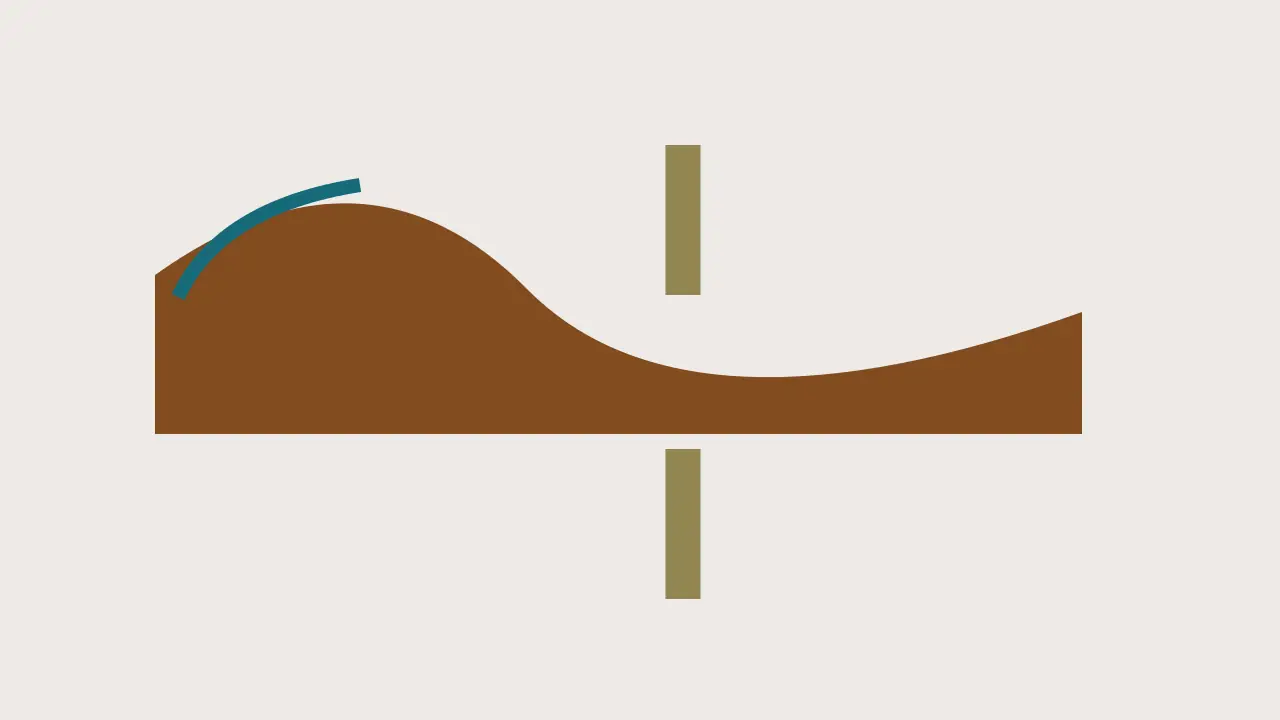
The traveler in Palm Passage originally got a smaller hand as soon as it touched the slot. The rest of the arm held the same shape. It seemed that the clay had vanished before the traveler crossed and reappeared when they rested on the other side. We needed a steady reference for the material that had moved, and a position where somebody could use it afterward.
Start by pressing a small area toward the elbow
The first model uses a flat thumb and four fingers gathered against a back edge. When the palm narrows, the fingers can turn a little and leave space beside the passage wall. Clay from the flat part collects along the back of the forearm. A small rise next to the elbow shows how the change redistributed the material. The traveler’s arm on the opposite side stays in its previous position. Its silhouette gives the viewer one more way to recognise the difference.
We tried giving the bulge a bright color. It made some readers think a separate object had been attached to the arm. The current pose follows a darker line along the side of the original clay. It keeps the same material and recent thumbprint. The edge of the bulge becomes visible only where the hand is held long enough to compare the two frames. It can still be found when the traveler turns sideways to fit through the slot.
Leave the area beside the opening clear
The gallery wall used to have a frame that wrapped around the opening. When the limb narrowed, the rear part of the frame obscured the one ridge a player might need to see. We cut the wall back on the inside and retained the near edge to set the size of the slot. Now the shape can be read from the traveler’s approach and from the narrow shelf that holds the elbow while the other hand reaches farther.
A cast shadow falls away from the upper part of the slot. This keeps the complicated part of the hand in darker light without losing the broad edge. The end of the shelf also has a small mark in the set. It belongs to an earlier use of the passage by another traveler. It makes the position recognisable when you see it from the far side of the wall.
Give moved material a use after the squeeze
The player can hold the new pose and inspect whether the palm can support weight. A narrow grip can get behind the ledge, but a broader part of the hand may be needed to rest on it. Move some of the bulge back along the same edge. A short animation shows the old shape still holding part of the ledge while a new surface is formed. We leave the shoulder a little uneven afterward to make the movement legible.
This gives us a concrete animation test. Stop on the first side and note where the extra clay went. Move the traveler to the shelf, press the arm along it, and check that the clay stays visible around the elbow. Recover enough of it to cover the open part of the lip. The player should recognise which area grew smaller as the support became more useful.
Compare the shape before the next corridor
Palm Passage follows the hand through the slot and uses the far ledge in the same exercise. The return pose note explains how the traveler keeps a usable grip rather than snapping back to the beginning pose. Its test begins at a different moment, when the traveler has passed the wall and can decide what to do with the material the first action moved. The shoulder mark stays with the character long enough to connect those two decisions.